



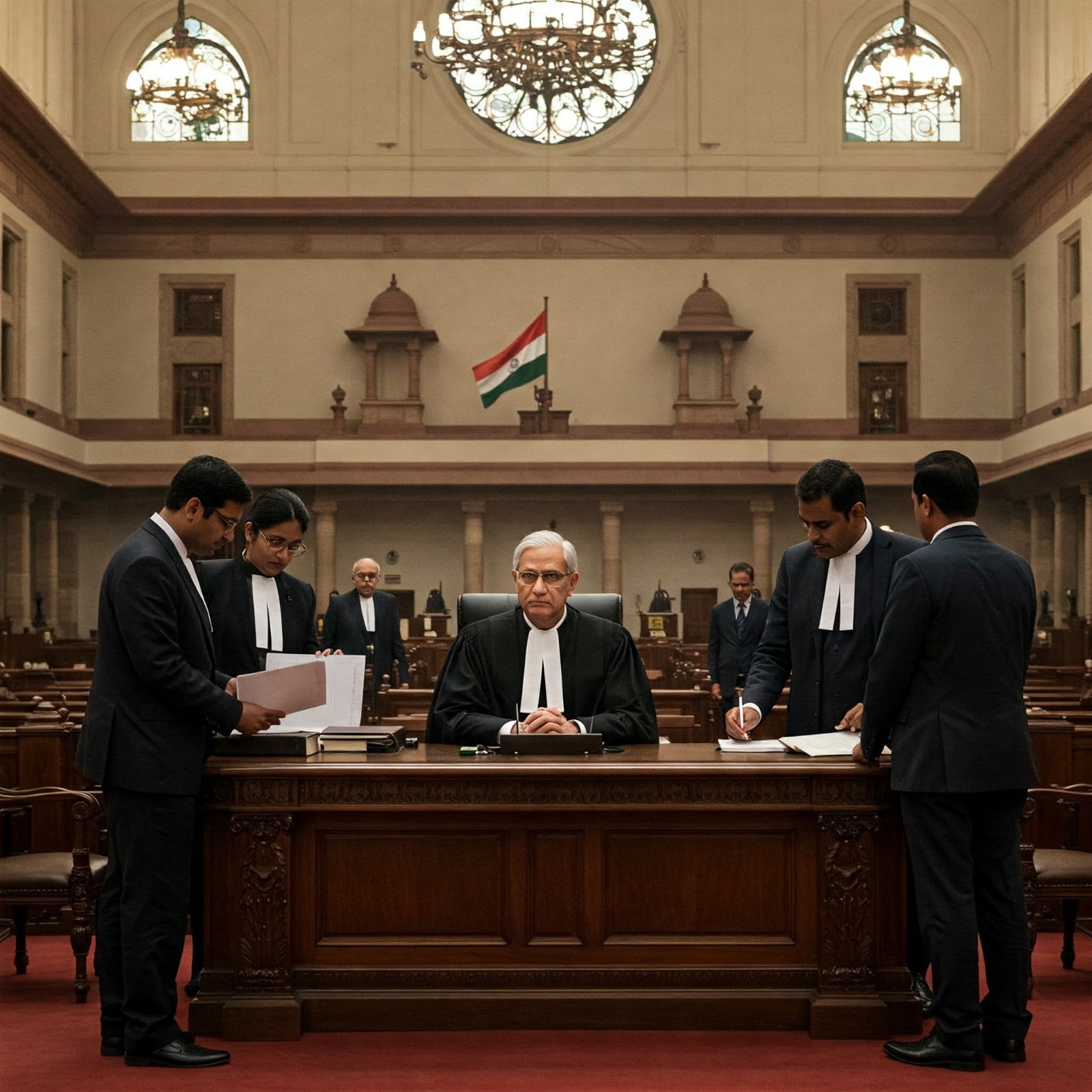
In a plea seeking the protection of ancient religious structures in Delhi's Mehrauli, the Supreme Court, on February 28, directed the Archaeological Survey of India (ASI) to submit a comprehensive report detailing the original architectural designs and subsequent modifications made to these historical sites. The Court further emphasized that no new construction or alterations should be undertaken on the existing structures to ensure their preservation.
A bench comprising Chief Justice of India Sanjiv Khanna and Justice Sanjay Kumar was hearing an appeal challenging the Delhi High Court’s decision, which declined to issue specific directives for safeguarding centuries-old religious monuments within the Mehrauli Archaeological Park. These include the 13th-century Ashiq Allah Dargah (built in 1317 AD) and the Chillagah of Baba Farid, both of which hold significant historical and cultural importance. The Supreme Court’s intervention underscores the judiciary’s role in balancing heritage conservation with urban development, ensuring that these revered sites are protected from potential encroachments or structural modifications.
In July 2024, the Court included the Archaeological Survey of India (ASI) in the case and requested status reports from both the ASI and the National Monument Authority (NMA). Additionally, on May 13, 2024, the Court merged a related petition, Himanshu Damle v. DDA, with the main case.
Today, during the hearing, the Court inquired as to how much of the old part of the structures is unauthorised construction. The CJI verbally opined to "Take down the site plan of the place, so that there is no further encroachment"
The Counsel for the ASI then submitted that a detailed report would be filed on the recent additions to the old structure: "We will find out which are those new structures which are coming under the new alternation centres"
The bench, noting that the structure's present dome design has been altered as compared to its old dome, said "There is some alteration which has been done because the roof which is now there is the modern roof, it's not the old gumbad roof"
To which ASI replied, "We will find out and file a comprehensive report".
Advocate Satyajit Sarna, appearing for Damle weighed in to add, "The reason why it is happening is because it's a living monument, worshipped by hundreds of people"
Recognizing this, the CJI noted that the issue concerns encroachers establishing shops near the structure and profiting from it. Advocate Nizam Pasha, counsel for the lead petitioner, argued that the ASI's report focused on repairs made to the structure and did not indicate any encroachment in its surroundings.
"Lordships that are not even the case of the ASI, what the ASI report says is that layers have been added in terms of whitewash, tiles, cement etc on the same structure, there is no encroachment, and there is no question of an additional structure being dug. It's not a monument which is protected, so it's not prohibited (the repairs)"
Pasha further stated that under the Ancient Monuments and Archaeological Sites and Remains Act, 1958 (AMASAR Act), repairs are not prohibited for monuments that have not been designated as protected. He emphasized that the structures in question do not hold protected status under the Act.
CJI interjected to stress, "The more you argue this, the more difficult position you get into, because how did you carry out such large-scale renovations without permission etc?"
The CJI noted that even if the structures are not designated as protected monuments, they would still be subject to certain regulations under the Archaeological Survey Act (AMASAR). In response, the ASI requested permission to submit a detailed report on the status of the structures. Granting the request, the Court directed that no new construction or additions be made to the existing structures.
"The status report is filed by ASI. It is however stated that it is an interim report as the other facets, including original structure as it existed, has to be ascertained and verified...relist in the week commencing 28 April, ASI is given liberty to file a status report, liberty is also granted to the parties to file their objections/ submissions. We clarify that there will not be any construction, additions in the existing structure"
Earlier, the Supreme Court had instructed the petitioners and authorities to first present their representations to a court-appointed Religious Committee. It further directed that any decision made by the committee must be recorded before being implemented.
 info@adhwaitha.com