SOUTHERN POWER DISTRIBUTION COMPANY OF TELANGANA LTD.(TSSPDCL) & ORS. V. B RAMESH & ANR 2025 INSC 326

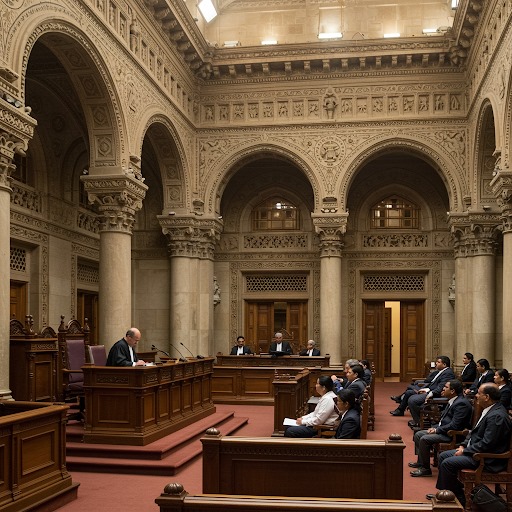



DATE: 17/02/2025
COURT: Supreme Court of India
BENCH: Justice Sudhanshu Dhulia and Justice K Vinod Chandran
FACTS:
The case arose from a dispute between a power distribution company and its former Contract Junior Lineman (CJLM), the respondent, regarding his appointment as an Office Subordinate. The respondent had been employed as a CJLM when he sustained a fracture in an accident while performing his duties. This injury rendered him incapable of clearing the physical test required for regular appointment to the CJLM post. Arguing that his inability to qualify was due to the accident, the respondent sought appointment to a non-technical post. He relied on the precedent of another employee, A. Anjaneyalu, who had been appointed to a non-technical post after suffering a permanent disability caused by an accident while discharging his duties. The Telangana High Court's Single Bench accepted the respondent's plea, holding that his situation was sufficiently similar to Anjaneyalu’s case and directed the company to appoint him as an Office Subordinate. The Division Bench later affirmed this decision, prompting the company to challenge the ruling before the Supreme Court.
The appellant company contended that the respondent's case was not identical to that of A. Anjaneyalu, as the latter had suffered a more severe, permanent disability, resulting in the amputation of his right hand. The company argued that the respondent’s injury was temporary and did not justify bypassing the regular selection process for appointment as an Office Subordinate. It maintained that such an appointment, without inviting public applications, would violate Article 16 of the Indian Constitution, which guarantees equality of opportunity in public employment. The respondent, on the other hand, asserted that he had been pursuing his case since 2007 and deserved compassionate consideration due to the accident. The Telangana High Court, favoring the respondent, ordered his appointment, which the Division Bench upheld. Aggrieved by this decision, the power distribution company appealed to the Supreme Court.
ISSUES:
The primary issues in this case are whether the Supreme Court should overturn the Telangana High Court’s orders directing the power distribution company to appoint the respondent as an Office Subordinate and whether the respondent's writ petition seeking such an appointment is legally valid. The company argues that the High Court's directive violates Article 16 of the Constitution by bypassing the public recruitment process. Meanwhile, the respondent claims his inability to clear the physical test was due to an accident suffered while on duty, justifying his plea for a non-technical post.
JUDGMENT WITH REASONING:
The Supreme Court allowed the appeal, setting aside the orders of both the Division Bench and the learned Single Judge of the Telangana High Court. The Court rejected the writ petition filed by the respondent, ruling that he was not entitled to appointment as an Office Subordinate. It held that the respondent’s failure in the physical test for the post of Contract Junior Lineman (CJLM) disqualified him from seeking regular appointment. The Court clarified that the respondent’s case could not be equated with that of A. Anjaneyalu, who had suffered a permanent disability while performing his duties.
The Court reasoned that the respondent's case lacked legal merit, as he had voluntarily participated in the pole climbing test following a previous High Court order and failed. It noted that the respondent only later claimed that his failure was due to a disability caused by an accident, which was an afterthought and not raised in his initial petition. The Court highlighted that the respondent merely suffered a fracture with no resulting permanent disability, unlike A. Anjaneyalu, who lost part of his right hand due to an amputation following an accident while on duty. Therefore, the Court found no justification for treating the two cases as identical.
Furthermore, the Court emphasized that the respondent's long-standing pursuit of the case since 2007 could not serve as a basis for granting him an alternate appointment without a valid legal foundation. It held that the principles of public employment, governed by Article 16 of the Constitution, required appointments to follow due process, including a public recruitment process. The Court concluded that appointing the respondent as an Office Subordinate without adhering to the prescribed selection process would be unjustified and contrary to the principles of equality and fair competition.
ANALYSIS:
The Supreme Court’s judgment underscores the principle of equality of opportunity in public employment, as enshrined in Article 16 of the Indian Constitution. By setting aside the Telangana High Court’s directive, the Court reaffirmed that appointments to public posts must adhere to a transparent selection process rather than be based on individual circumstances or compassionate considerations. The Court clarified that the respondent's case could not be treated on par with that of A. Anjaneyalu, who had suffered a permanent disability due to an accident while discharging his duties. Since the respondent’s injury was temporary and did not result in lasting physical impairment, he could not claim similar relief. The Court emphasized that public employment requires fairness and merit-based selection, and granting the respondent a non-technical post without following the proper recruitment procedure would amount to preferential treatment, violating the constitutional principle of equality.
Furthermore, the judgment highlights the importance of legal consistency and the integrity of judicial orders. The Court observed that the respondent had voluntarily participated in the pole climbing test after previously seeking and receiving a favorable High Court order but failed. His subsequent claim that his inability to clear the test was due to a disability was deemed an afterthought, weakening his case. The Court's decision also reinforces that long-standing litigation, in itself, does not justify granting relief without a sound legal basis. It concluded that while the respondent may have faced genuine hardship, granting him appointment without adhering to the established recruitment norms would undermine the principles of fair competition and public employment regulations. This ruling serves as a significant precedent in ensuring that public sector appointments remain merit-based and transparent, even in cases involving workplace injuries.
 info@adhwaitha.com
