


DATE: 24/11/1961
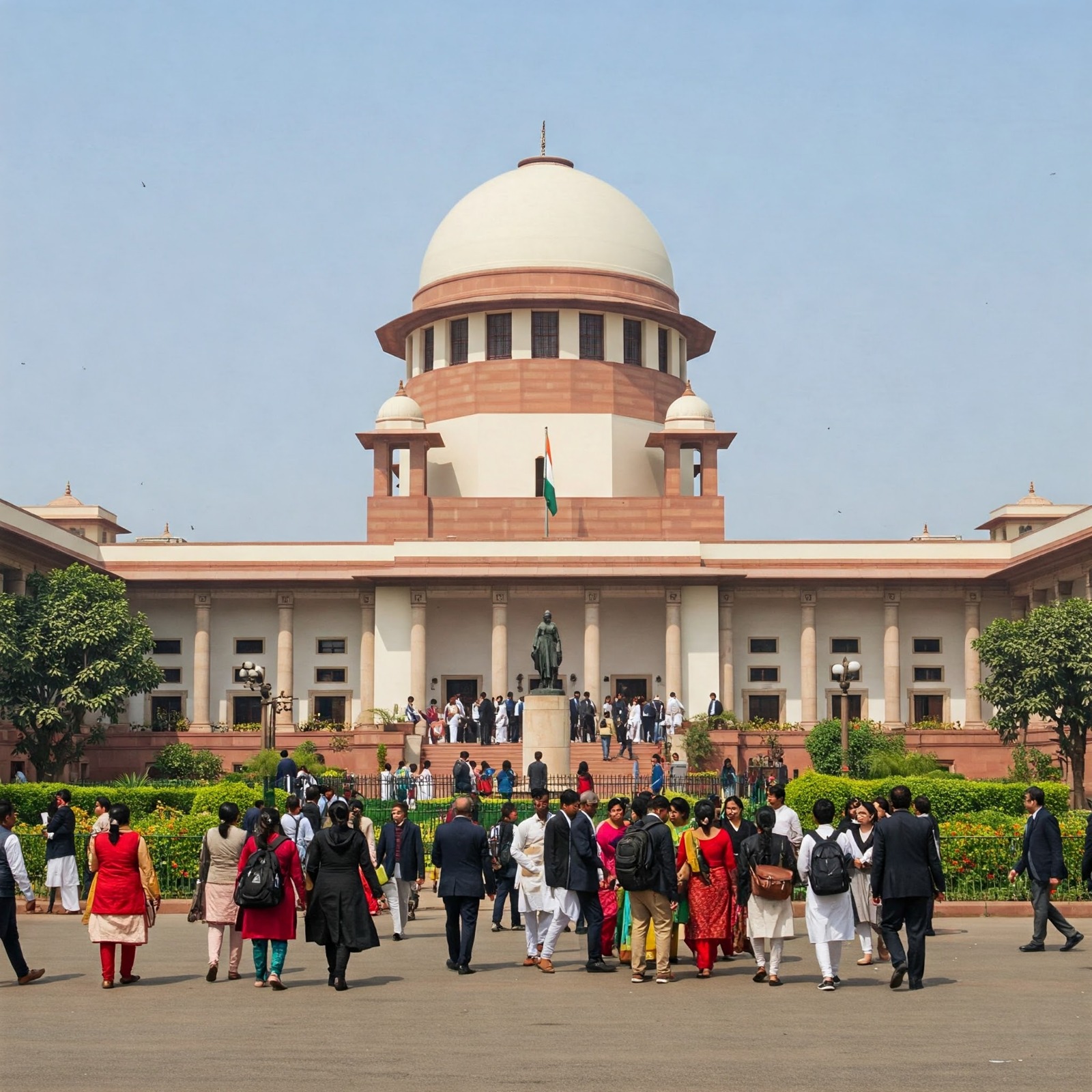
COURT: Supreme Court of India
BENCH: Justice K. Subbarao, Justice S. K. Das and Justice Raghubar Dayal
OVERVIEW:
The case of K. M. Nanavati v. State of Maharashtra (1962 AIR 605, 1962 SCR Supl. (1) 567) is one of the most famous criminal cases in Indian legal history, involving themes of murder, provocation, and the judicial interpretation of culpable homicide versus murder. The case arose when Commander K. M. Nanavati, a naval officer, was accused of murdering Prem Ahuja, his wife’s paramour, on April 27, 1959. Upon discovering his wife Sylvia’s extramarital affair with Ahuja, Nanavati confronted him at his residence and shot him with his service revolver. Nanavati then surrendered himself to the police, claiming that the shooting occurred in a fit of sudden and grave provocation.
At trial, Nanavati pleaded not guilty, arguing that the murder was not premeditated but a spontaneous act of rage provoked by Ahuja’s alleged callous response regarding his relationship with Sylvia. The case was initially tried by a jury, which returned a verdict of not guilty. However, the Bombay High Court overruled the jury's decision, finding it perverse and convicting Nanavati of murder under Section 302 of the Indian Penal Code (IPC). The Supreme Court, on appeal, upheld the High Court’s decision, ruling that the act was deliberate and premeditated, and rejected the defense of sudden provocation. The case garnered significant public and media attention, ultimately leading to the abolition of jury trials in India. It also set a precedent on the legal interpretation of provocation and the distinction between culpable homicide and murder under Indian criminal law.
FACTS:
The case arose from a tragic incident of adultery and murder that unfolded in Bombay (now Mumbai) in 1959. Commander Kawas Manekshaw Nanavati was a decorated officer in the Indian Navy, married to Sylvia Nanavati. The couple had three children and appeared to have a stable family life. However, during Nanavati’s long absences due to naval duties, Sylvia developed an extramarital relationship with Prem Ahuja, a wealthy businessman. Upon Nanavati’s return from one of his assignments, Sylvia confessed to the affair and expressed her desire to leave him for Ahuja. Shocked by the revelation, Nanavati, though visibly disturbed, remained composed. On April 27, 1959, he dropped his family off at a cinema and went to his ship, where he collected his service revolver and six cartridges under the pretext of self-defense, claiming that he intended to confront Ahuja to settle the matter.
Nanavati then drove to Ahuja’s residence, entered his bedroom, and demanded to know whether Ahuja intended to marry Sylvia and take responsibility for the children. When Ahuja allegedly responded indifferently, stating, "Am I supposed to marry every woman I sleep with?" Nanavati, in a fit of rage, fired three shots at Ahuja, killing him instantly. After the shooting, Nanavati calmly walked out, drove to the Naval Provost Marshal's office, and confessed to the crime. He later surrendered to the police. Nanavati claimed that the killing occurred in the heat of passion, prompted by Ahuja’s provocative response, and argued that it was not a premeditated act of murder.
The case proceeded to trial before the Sessions Court in Bombay, where Nanavati was charged with murder under Section 302 of the Indian Penal Code (IPC). His defense argued that the shooting was a spontaneous act resulting from grave and sudden provocation, making it a case of culpable homicide not amounting to murder under Section 304 of the IPC. The trial was conducted by a jury, which returned a verdict of not guilty by an 8-1 majority, accepting Nanavati’s claim of provocation. However, the presiding judge, Justice R. B. Mehta, found the jury’s decision to be perverse and referred the case to the Bombay High Court under Section 307 of the Code of Criminal Procedure (CrPC), which allows the judge to overturn a jury verdict if it is deemed unreasonable.
The Bombay High Court reviewed the case and found Nanavati guilty of murder under Section 302 of the IPC. The Court held that the act was deliberate and premeditated, rejecting the defense of sudden provocation. It reasoned that the time gap between Sylvia’s confession and the shooting provided Nanavati with sufficient cooling-off time, making the crime a calculated act rather than a spontaneous one. The High Court sentenced him to life imprisonment. Nanavati appealed the decision to the Supreme Court of India, which became the final stage of the legal battle. The case, with its sensational details of love, betrayal, and murder, attracted massive public attention and media coverage, turning it into one of the most widely followed criminal trials in Indian history
ISSUES:
As contradicting to Nanavati case, whether the Governor’s pardoning power and special leave petition can be combined together?
The major question of the Nanavati case is whether the act was done in the sudden moment accidentally or was it a pre-planned assassination?
Whether the High Court has the authority under Section 307(3) of the CrPC to overturn a jury’s judgment on the basis of misdirection in charge?
Whether the High Court lacked jurisdiction to investigate the circumstances in order to evaluate the competency of the Sessions Judge’s reference under Section 307 of the CrPC?
LEGAL PROVISIONS:
Indian Penal Code (IPC), 1860:
Section 302 – Punishment for murder.
Section 304 – Punishment for culpable homicide not amounting to murder.
Section 300 – Definition of murder, including exceptions related to sudden provocation.
Section 299 – Definition of culpable homicide.
Code of Criminal Procedure (CrPC), 1898 (applicable at the time):
Section 307 – Power of the Sessions Judge to refer a case to the High Court if the jury's verdict is deemed perverse or unreasonable.
Section 374 – Appeal to the High Court from the conviction by the Sessions Court.
Section 411A – Provisions related to jury trials (later abolished after this case
CASES CITED:
Virsa Singh v. State of Punjab (1958 AIR 465, 1958 SCR 1495)
Emperor v. Dhirajia (1940 AIR 279)
R. v. Govinda (1876 ILR 1 Bom 342)
R. v. Holmes (1953 1 All ER 689)
M. N. Nanjundar v. State of Mysore (1958 AIR 290)
R. v. Duffy (1949 1 All ER 932)
State of Andhra Pradesh v. Rayavarapu Punnayya (1977 AIR 45, 1977 SCR (2) 601)
JUDGMENT WITH REASONING:
The Supreme Court upheld the Bombay High Court’s conviction of Nanavati for murder under Section 302 of the Indian Penal Code (IPC). The Court rejected the defense’s claim of sudden and grave provocation and ruled that the killing was premeditated. It affirmed that Nanavati’s actions were deliberate, calculating, and not impulsive, thereby qualifying as murder rather than culpable homicide not amounting to murder. The Court dismissed Nanavati’s appeal and confirmed his life imprisonment sentence, holding that the jury’s earlier verdict of not guilty was perverse and unreasonable.
The Supreme Court’s reasoning was based on a detailed analysis of the legal principles governing murder, culpable homicide, and provocation. It held that the defense of sudden and grave provocation could not apply in this case due to the presence of a cooling-off period. The Court reasoned that Nanavati had ample time between Sylvia’s confession and the shooting to regain his composure. The fact that he drove his family to a cinema, went to his ship, retrieved his service revolver, and then proceeded to Ahuja’s residence indicated a chain of deliberate and calculated actions, not a spontaneous loss of self-control. The Court emphasized that the time gap between the provocation and the fatal act disproved the claim of suddenness, rendering the plea of grave provocation inapplicable.
The Court further highlighted Nanavati’s conduct after the shooting as evidence of premeditation. His calm demeanor, willingness to surrender, and subsequent statements to the police demonstrated that he was fully aware of his actions. The Court concluded that the manner in which Nanavati obtained the revolver and loaded it with six cartridges reflected preparation rather than impulsive rage. It rejected the defense’s argument that Nanavati carried the gun for self-defense, holding that his possession of the firearm was part of a pre-planned act. The Court also dismissed the contention that Ahuja’s alleged provocative statement, "Am I supposed to marry every woman I sleep with?" amounted to grave provocation. It ruled that mere offensive or humiliating words, however hurtful, do not justify a plea of grave provocation sufficient to reduce the offense from murder to culpable homicide.
Additionally, the Court affirmed the Bombay High Court’s decision to overrule the jury’s verdict under Section 307 of the Code of Criminal Procedure (CrPC). It held that the jury's not guilty verdict was manifestly unreasonable and contrary to the evidence, warranting judicial intervention. The Court emphasized that the judiciary had the power to set aside a perverse jury verdict if it was inconsistent with the evidence and legal principle
Lastly, the judgment also clarified the distinction between culpable homicide and murder under Sections 299 and 300 of the IPC. The Court reiterated that the presence of premeditation, absence of sudden provocation, and the deliberate nature of the act indicated that Nanavati was guilty of murder. The ruling became a significant precedent in Indian criminal law, reinforcing the principles governing provocation, premeditation, and the limits of the jury system.
CRITICISMS:
The judgment in K. M. Nanavati v. State of Maharashtra (1962) faced significant criticism for its perceived harshness and judicial interpretation of provocation. One of the primary criticisms was that the Supreme Court’s ruling ignored the emotional and psychological turmoil experienced by Nanavati upon discovering his wife’s infidelity. Critics argued that the Court applied an overly rigid and technical interpretation of sudden and grave provocation, failing to adequately consider the impact of Sylvia’s confession on Nanavati’s mental state. Legal experts contended that the Court placed undue emphasis on the time gap between the provocation and the act, disregarding the cumulative emotional distress Nanavati suffered. They argued that even though there was a brief cooling-off period, Nanavati was still acting under the influence of emotional upheaval, making the case more fitting for culpable homicide rather than murder.
The Court’s rejection of Ahuja’s alleged statement as insufficient provocation also drew criticism. Legal scholars opined that the Court’s narrow interpretation of provocation failed to consider the cultural and social context of the time, where adultery carried significant stigma and emotional consequences. They argued that Ahuja’s alleged dismissive and callous response could reasonably be seen as sufficient provocation to trigger a violent reaction. The ruling was criticized for failing to recognize the subjective nature of provocation and for applying a purely objective standard, which some viewed as insensitive to the human emotions involved.
Furthermore, the Court’s endorsement of the Bombay High Court’s decision to overrule the jury’s verdict sparked controversy. Critics argued that the judiciary’s intervention undermined the sanctity of the jury system and reflected a lack of faith in public opinion. The jury’s not guilty verdict, though contested by the presiding judge, was seen by many as an expression of public sympathy for Nanavati. The Court’s decision to disregard the jury’s finding was viewed as judicial overreach, raising concerns about the diminishing role of juries in India’s criminal justice system. This case was pivotal in influencing the eventual abolition of jury trials in India, with critics arguing that it weakened the participatory role of citizens in the judicial process.
Lastly, the judgment was criticized for being unduly punitive, given the unique circumstances of the case. Many believed that Nanavati’s actions, while legally culpable, were emotionally driven rather than premeditated, warranting a lesser charge of culpable homicide. The Court’s refusal to accept the provocation defense was seen as excessively strict, overlooking the mitigating factors of betrayal and emotional distress. Overall, the judgment was viewed by some as a failure to balance legal principles with human realities, leading to debates over the interpretation of provocation and the fairness of judicial intervention in jury verdicts.
ANALYSIS:
The Supreme Court’s decision in K. M. Nanavati v. State of Maharashtra (1962) was a landmark ruling that significantly influenced Indian criminal jurisprudence. The Court upheld the Bombay High Court’s conviction of Nanavati for murder under Section 302 of the Indian Penal Code (IPC), rejecting the defense of sudden and grave provocation. It ruled that Nanavati’s actions were deliberate and premeditated rather than impulsive, making him guilty of murder rather than culpable homicide not amounting to murder. The Court reasoned that the time gap between Sylvia’s confession of infidelity and the killing of Prem Ahuja provided Nanavati with a cooling-off period, during which he could have regained his composure. By driving his family to the cinema, proceeding to his ship, collecting his service revolver with six cartridges, and then heading to Ahuja’s residence, Nanavati demonstrated a clear and calculated course of action. The Court interpreted these sequential steps as evidence of premeditation, ruling out the plea of sudden provocation.
Furthermore, the Court found Nanavati’s calm and composed behavior after the shooting indicative of his awareness and control over his actions. His voluntary surrender to the police and subsequent statements reflected that he was fully conscious of his conduct, further disproving the claim of acting under emotional turmoil. The Court also rejected the defense’s argument that Ahuja’s alleged dismissive statement, "Am I supposed to marry every woman I sleep with?" constituted grave provocation. It held that mere offensive or humiliating words, no matter how hurtful, could not justify a plea of grave provocation sufficient to reduce the offense from murder to culpable homicide. The Court emphasized that the legal standard for grave provocation required the act to be so immediate and intense that it caused the accused to lose self-control entirely, which was not the case here. The deliberate nature of Nanavati’s actions, the acquisition of the revolver, and the precise shooting of Ahuja demonstrated premeditation rather than spontaneous rage.
The Court also addressed the procedural aspect of the case by affirming the Bombay High Court’s authority to overturn the jury’s verdict. It held that the jury’s finding of not guilty was perverse and unreasonable, given the clear evidence of premeditation and deliberate intent. The Court ruled that under Section 307 of the Code of Criminal Procedure (CrPC), the High Court had the power to overrule a jury verdict if it was manifestly contrary to the evidence and legal principles. By doing so, the Court reaffirmed the judiciary’s power to intervene in cases where jury decisions were deemed flawed or contrary to the weight of the evidence. This decision significantly curtailed the influence of jury trials in India, as the case became a catalyst for the eventual abolition of the jury system in the country.
Additionally, the Court distinguished between culpable homicide and murder, clarifying the legal principles under Sections 299 and 300 of the IPC. It ruled that the presence of premeditation, the absence of sudden provocation, and the deliberate execution of the crime clearly indicated that Nanavati was guilty of murder. The judgment emphasized that the legal distinction between culpable homicide and murder rested on the degree of intention and pre-planning, with Nanavati’s actions falling squarely under the definition of murder. Overall, the ruling upheld the principles of judicial oversight, clarified the legal interpretation of provocation, and reinforced the judiciary’s authority over jury verdicts, leaving a lasting impact on Indian criminal law and the justice system.
 info@adhwaitha.com