


DATE: 23/04/1985
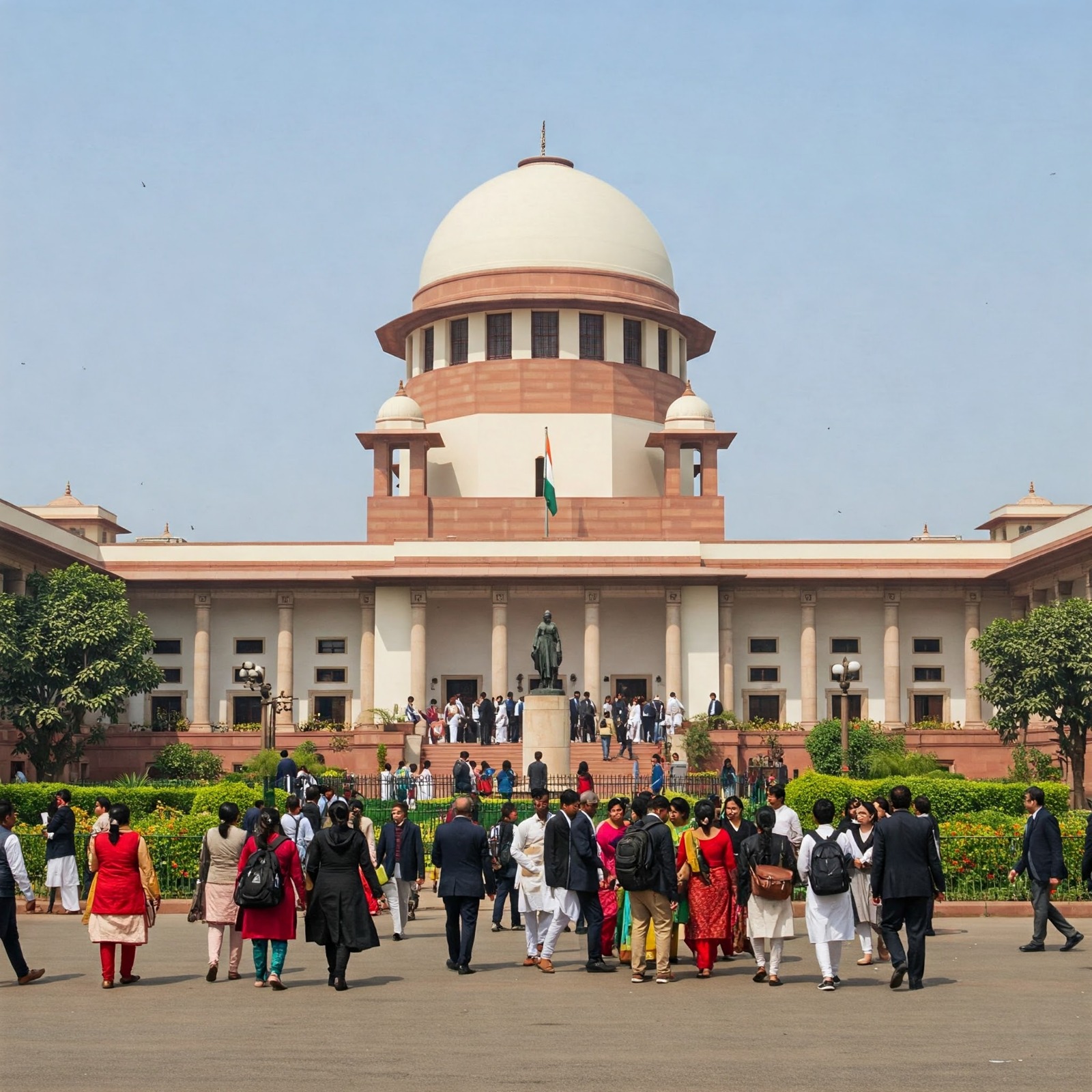
COURT: Supreme Court of India
BENCH: Chief Justice Jagadish Singh Khehar, Justice Abdul Nazeer, Justice Rohinton Nariman, Justice U.U. Lalit and Justice Kurian Joseph
OVERVIEW:
The case of Shayara Bano v. Union of India and Others (AIR 2017 SC 4609) is a landmark judgment that addressed the constitutional validity of the practice of talaq-e-bidat or instant triple talaq, which allowed a Muslim man to unilaterally divorce his wife by pronouncing "talaq" three times in a single sitting. The petitioner, Shayara Bano, challenged the legality of this practice after her husband divorced her through instant triple talaq, claiming it violated her fundamental rights under Articles 14 (equality before the law), 15 (prohibition of discrimination), 21 (protection of life and personal liberty), and 25 (freedom of religion) of the Indian Constitution. She argued that the practice was arbitrary, discriminatory, and left women vulnerable to exploitation and destitution. The case sparked a significant debate on gender justice, religious freedom, and the protection of personal rights. The Supreme Court, in a 3:2 majority verdict, declared talaq-e-bidat unconstitutional, holding that it was manifestly arbitrary, discriminatory, and violative of fundamental rights. The Court concluded that the practice lacked any legal sanctity and was not protected under the right to religious freedom. This historic judgment marked a major step toward promoting gender equality and safeguarding the rights of Muslim women in India.
FACTS:
The case arose from the personal grievance of Shayara Bano, a Muslim woman from Uttarakhand, who was unilaterally divorced by her husband, Rizwan Ahmed, through the practice of talaq-e-bidat, also known as instant triple talaq. In 2016, after 15 years of marriage, Rizwan divorced her by pronouncing "talaq" three times in a single sitting, without any prior reconciliation or due process. Following the divorce, Shayara Bano faced severe emotional, social, and financial hardships. She filed a writ petition before the Supreme Court of India, challenging the constitutional validity of talaq-e-bidat. In her petition, she contended that the practice was arbitrary, discriminatory, and violative of her fundamental rights under Articles 14, 15, 21, and 25 of the Indian Constitution. She argued that instant triple talaq denied Muslim women the protection against arbitrary divorce that women from other religions enjoyed under secular marriage laws.
The case gained national significance due to its broader implications for gender justice and the rights of Muslim women. Several women’s rights groups and the Union of India supported Shayara Bano's plea, arguing that talaq-e-bidat subjected Muslim women to sudden and unilateral abandonment without any legal recourse. The All India Muslim Personal Law Board (AIMPLB), on the other hand, defended the practice, asserting that it was a part of personal law and therefore protected under the right to religious freedom.
The judicial procedural history of the case involved the Supreme Court forming a five-judge constitutional bench to examine the validity of talaq-e-bidat. The bench heard arguments from various stakeholders, including the petitioners, the Union of India, and Muslim organizations. The case also brought to light the ongoing debate about the role of personal laws versus fundamental rights under the Constitution. The Court recognized the gravity of the issue, as many Muslim women across India faced similar arbitrary divorces, which left them economically vulnerable and socially stigmatized. The matter was heard over six days in May 2017, marking one of the longest hearings on a constitutional matter in recent years. The case was eventually reserved for judgment, which was delivered in August 2017, declaring talaq-e-bidat unconstitutional.
ISSUES:
Whether the practice of talaq-e-bidat (instant triple talaq) was constitutionally valid under the Indian Constitution.
Whether talaq-e-bidat was an essential religious practice protected under Article 25 (freedom of religion) of the Constitution.
Whether the practice of instant triple talaq violated the fundamental rights guaranteed under Articles 14 (equality before the law), 15 (prohibition of discrimination), and 21 (protection of life and personal liberty).
Whether the judiciary had the authority to intervene in personal laws governed by religious customs and practices.
Whether the practice of talaq-e-bidat was manifestly arbitrary and therefore unconstitutional.
Whether talaq-e-bidat should be declared void, illegal, and unenforceable.
Whether the Court should direct the legislature to enact a law regulating or prohibiting the practice of instant triple talaq.
LEGAL PROVISIONS:
Article 14 of the Indian Constitution – Right to Equality
Article 15 of the Indian Constitution – Prohibition of Discrimination
Article 21 of the Indian Constitution – Protection of Life and Personal Liberty
Article 25 of the Indian Constitution – Freedom of Religion
The Muslim Personal Law (Shariat) Application Act, 1937
The Dissolution of Muslim Marriages Act, 1939
Section 2 of the Muslim Personal Law (Shariat) Application Act, 1937 – Governing marriage, divorce, and related matters under Muslim personal law.
CASES CITED:
Shamim Ara v. State of U.P. (2002) 7 SCC 518
Krishna Singh v. Mathura Ahir (1981) 3 SCC 689
Sarla Mudgal v. Union of India (1995) 3 SCC 635
Ahmedabad Women Action Group (AWAG) v. Union of India (1997) 3 SCC 573
Javed v. State of Haryana (2003) 8 SCC 369
State of Bombay v. Narasu Appa Mali AIR 1952 Bom 84
Lily Thomas v. Union of India (2000) 6 SCC 224
Indra Sawhney v. Union of India (1992) Supp 3 SCC 217
Minerva Mills Ltd. v. Union of India (1980) 3 SCC 625
Kesavananda Bharati v. State of Kerala (1973) 4 SCC 225
JUDGEMENT WITH REASONING:
The Supreme Court, by a 3:2 majority, declared the practice of talaq-e-bidat (instant triple talaq) unconstitutional. The Court held that the practice was manifestly arbitrary and violated the fundamental rights of Muslim women under Articles 14 and 21 of the Indian Constitution. It ruled that talaq-e-bidat lacked legal sanctity and was not protected under Article 25, as it was not an essential religious practice. The Court struck down the practice, making it invalid and unenforceable. However, the Court refrained from issuing any legislative directions, leaving it to the Parliament to enact appropriate laws governing Muslim divorce practices.
The Supreme Court, in its detailed reasoning for the judgment held that the practice of talaq-e-bidat was unconstitutional as it was manifestly arbitrary and discriminatory against Muslim women. The Court reasoned that this form of instant divorce, which allowed a Muslim man to unilaterally dissolve the marriage without providing any opportunity for reconciliation or due process, violated the fundamental rights guaranteed under Articles 14 and 21 of the Indian Constitution. It observed that the arbitrary power granted to men through this practice resulted in an unequal and unfair treatment of Muslim women, thereby infringing upon their right to equality and dignity. The Court rejected the argument that talaq-e-bidat was an essential religious practice protected under Article 25, ruling that religious practices cannot be immune from constitutional scrutiny if they violate fundamental rights. It emphasized that while religious freedom is protected, it is subject to constitutional morality and cannot be used to justify practices that are unjust, unfair, or discriminatory.
The Court further relied on the precedent set in the case of Shamim Ara v. State of U.P., which had held that mere pronouncement of talaq does not lead to valid divorce unless accompanied by a reasonable cause and efforts for reconciliation. The majority also took note of the fact that several Islamic countries, including Pakistan and Bangladesh, had already abolished the practice, highlighting that its continued existence in India was regressive and discriminatory.
In terms of relief, the Court declared the practice of talaq-e-bidat unconstitutional, making it void and legally unenforceable. It invalidated all instances of divorce through instant triple talaq after the date of the judgment. However, the Court refrained from issuing any immediate legislative directions and left the matter to the Parliament, giving the legislature the authority to enact a law governing the regulation of divorce practices among Muslims. This decision ultimately led to the enactment of the Muslim Women (Protection of Rights on Marriage) Act, 2019, which criminalized the practice of instant triple talaq.
CRITICISMS:
The judgment in Shayara Bano v. Union of India and Others received both praise and criticism. One of the primary criticisms was that the Court, while declaring the practice of talaq-e-bidat unconstitutional, failed to provide immediate legal safeguards for Muslim women affected by instant triple talaq. Although the Court invalidated the practice, it refrained from issuing clear legislative guidelines or remedial measures, leaving it to the Parliament. This created a legal vacuum, as the judgment did not specify the consequences for those who still practiced talaq-e-bidat until the Parliament enacted the Muslim Women (Protection of Rights on Marriage) Act, 2019, two years later. Critics argued that this delay left many women without immediate legal protection.
Another criticism was that the Court's reasoning, while focusing on the arbitrariness of talaq-e-bidat, was seen by some as an overreach into religious practices. Opponents argued that the Court’s decision amounted to judicial interference in religious laws and traditions, potentially undermining the constitutional protection of religious freedom under Article 25. The All India Muslim Personal Law Board (AIMPLB) contended that personal laws, being part of religious freedom, should not be subjected to constitutional scrutiny, claiming that the judgment interfered with religious autonomy.
Additionally, some scholars and activists argued that the judgment addressed only one aspect of gender discrimination in Muslim personal law. They contended that the Court did not address other discriminatory practices such as polygamy and nikah halala, which also significantly impact the rights and dignity of Muslim women. Therefore, while the judgment was hailed as a victory for gender justice, critics viewed it as a partial reform that failed to comprehensively address gender inequality in Muslim personal law.
ANALYSIS:
The judgment in Shayara Bano v. Union of India and Others is a landmark ruling that addressed the conflict between religious practices and constitutional rights. The Supreme Court, in its detailed analysis, declared the practice of talaq-e-bidat (instant triple talaq) unconstitutional, holding that it was manifestly arbitrary and violated the fundamental rights of Muslim women. The Court reasoned that the practice granted Muslim men the absolute and unilateral power to dissolve a marriage without providing any scope for reconciliation or legal recourse, thereby leaving women vulnerable to sudden abandonment and economic instability. This, the Court held, was in direct violation of Articles 14 and 21 of the Indian Constitution, which guarantee the right to equality and protection of life and personal liberty. The majority opinion emphasized that arbitrary practices, even if sanctioned by personal law, could not override fundamental rights. The Court asserted that gender justice and equality must take precedence over religious customs when the latter result in discrimination and injustice.
The Court further rejected the contention that talaq-e-bidat was an essential religious practice protected under Article 25 of the Constitution. It reasoned that religious freedom is subject to constitutional limitations and cannot be used as a shield to justify practices that are unjust or discriminatory. The Court observed that the practice was not a core tenet of Islam but rather an undesirable custom that lacked religious sanctity. It cited the fact that several Islamic countries, including Pakistan, Bangladesh, and Egypt, had already abolished instant triple talaq, indicating that it was not intrinsic to the faith. The judgment also drew upon the precedent set in Shamim Ara v. State of U.P., where the Court had held that mere pronouncement of talaq without valid reasons and efforts for reconciliation was invalid. The bench reiterated that divorce under Muslim law required just cause and an attempt at reconciliation, which talaq-e-bidat bypassed, making it arbitrary and unfair.
In analyzing the legal implications, the Court noted that while personal laws are protected under Article 25, they are not immune from constitutional scrutiny. It emphasized that the protection of fundamental rights prevails over personal law when the two are in conflict. The Court also considered the broader social impact of instant triple talaq, highlighting the hardships faced by Muslim women, including lack of financial security, social stigma, and deprivation of marital rights without due process. The judgment recognized that the practice perpetuated gender inequality and undermined the dignity of Muslim women, thereby violating the principles of justice, equality, and fairness enshrined in the Constitution.
Despite declaring talaq-e-bidat unconstitutional, the Court refrained from issuing specific legislative directions, leaving the matter to Parliament. It held that the legislature was better suited to enact a comprehensive law regulating Muslim divorce practices. This decision ultimately led to the passage of the Muslim Women (Protection of Rights on Marriage) Act, 2019, which criminalized the practice of instant triple talaq. The Court’s judgment was widely regarded as a progressive step towards promoting gender justice, although it was also criticized for leaving a temporary legal vacuum until the enactment of the 2019 law. Overall, the judgment reflected the Court’s commitment to upholding constitutional values of equality and non-discrimination over regressive personal laws.
 info@adhwaitha.com